
Matias Huhtala: 10 years in Lithuania – delighted to be a part of this successful country
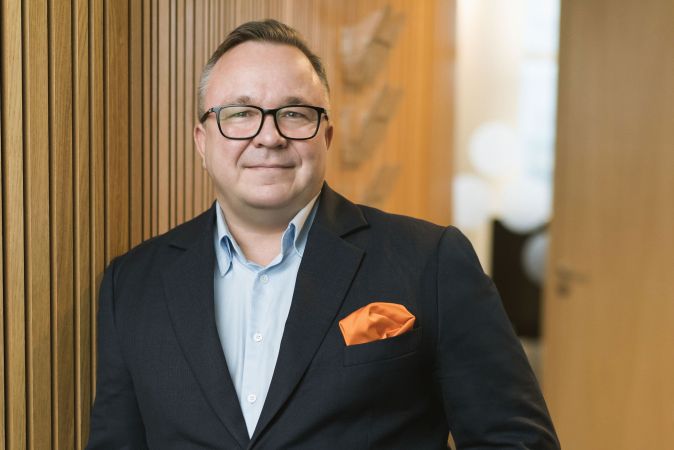
We continue our ten-year anniversary series and invite you to read the interview with Matias Huhtala, Head of Baltic Banking, who personally participated in the establishment of OP Corporate Bank branches in Lithuania, Latvia, and Estonia. Have they managed to achieve what Finland's largest financial group expected when entering the Baltic markets? What was the journey like, and what are the goals for the future?
What has the past decade been like for the bank in Lithuania?
Banking is built on trust, and I believe that over this time, we have managed to earn the trust of both our team and our clients. I am pleased that we can make quick decisions, that we know our clients well, and that we understand what brings them success.
These years have been successful for us; we've been growing each year without facing any bigger impairment. We are becoming stronger, expanding our market share, and we are happy to be a part of this successful country.
During this period, Lithuania has transformed significantly as a state – infrastructure has developed, major cities have grown. It's evident – just look at the city centres in the capital, Kaunas, many changes happened in Klaipėda and other cities too.
Lithuania's banking market has come closer to Scandinavian and European banking traditions; practices have converged. Nevertheless, European Union regulations have become much stricter during this time, which all banks in Europe must adapt to. Issues related to anti-money laundering have come to the forefront, and in recent years due to war, we have faced challenges such as sanctions, inflation, recession, and more.
During this time, you have become one of the largest business financiers in the country – what is the current state of the bank's portfolio, and how is collaboration with businesses going?
We primarily focus on large and leading medium-sized local companies, and we also work with state institutions. We help Finnish companies to enter the Lithuanian market, although this is not a significant portion of our clientele, as Lithuania has around 200 Finnish companies in total, whereas, for example, there are over 5,000 in Estonia.
We aim to diversify portfolios that match our risk tolerance, and we have to do that in not the biggest local market, therefore we concentrate on businesses that are already established in the Baltic or European countries. Lithuania's market is interesting to us, and we are delighted to work with local businesses. Personally, I'm impressed by the fact that companies in Lithuania are often owned by local businesspeople.
We began our operations in the Baltic countries by acquiring leasing companies from the Finnish Kesko group in four countries, including Lithuania. That happened 15 years ago – in 2008. At that time, the main focus of these leasing companies was agriculture, but this sector is seasonal. After the acquisition, we started diversifying the leasing portfolio, analysed the market, and began working with logistics and transportation companies, which is a significant sector in Lithuania. Lithuanian transport companies were doing well, they were growing rapidly. We grew with our clients, and currently, we are the third-largest provider of leasing services in Lithuania.
We are pleased with our chosen strategy of working with large companies, leaving smaller ones to other leasing companies. Currently, we have about 15-20% of the entire leasing market in Lithuania, and our share in the logistics sector is almost twice as large.
Our leasing portfolio in Lithuania amounts to 539 million EUR, with the majority consisting of transportation companies. We cannot refer to them as Lithuanian companies anymore since they are already European-level companies with headquarters in Lithuania.
Which projects stand out the most from this past decade?
Right after we started our banking activities in Lithuania, we provided a 147 million EUR loan to a privately-owned real estate company in Lithuania. To this day, it remains one of the largest loans our bank has granted to a privately-owned company. It's also one of the largest loans in the Lithuanian market. It was a successful start for the bank in Lithuania.
I am currently pleased with the growing portfolio of green loans; we finance more and more projects where businesses transition to more sustainable activities – increasing energy efficiency, implementing renewable generation, or purchasing electric trucks. Significant changes are taking place, and we aim to stay ahead of them.
How do the century-old banking traditions of the Finnish group align with Lithuanian ones?
The OP group has a 121-year history, so we could say that the ability to adapt to innovations while preserving what is valuable is in the bank’s DNA.
A significant part of our team has extensive experience in banking, including myself – my career at OP Bank already lasts for 19 years, and I had previous experience in the banking sector as well. Over the years, certain beliefs and understandings of how things should work are formed. When entering the Baltic countries, we had the assumption that the processes that work in Finland would work here as well. However, that was not the case.
We realized that each country's market has slightly different practices, so we had to adapt more to local practices, which turned out to be the right approach, and everything started running smoother. It was a long learning process for everyone. I believe that when entering a new market, it's essential to find trustworthy local people whom you can trust and listen to their advice in adapting your business to the local market. This can save a lot of time.
What led the largest Finnish financial group to Lithuania and other Baltic countries?
About fifteen years ago, we were considering how we could assist Finnish companies in expanding. At that time, our bank in Finland had a substantial market share, and we were looking for new growth opportunities. Sweden had always been an important market for Finnish exports, but we decided not to pursue that path. Instead, we decided to dig deeper into the Baltic countries since we were already collaborating extensively with Estonian companies. Eventually, we chose this path to help Finnish companies enter the Baltic countries and develop their businesses here.
We saw that there were many strong, rapidly growing companies in the Baltic countries, and they were growing faster than companies in Finland. The GDP of the Baltic countries was also developing successfully. After acquiring leasing companies, we began developing corporate banking systems, obtained banking licenses, and made our first official money transfer in Lithuania in February 2013. We started reporting to the Bank of Lithuania, and more and more companies chose to work with us, making us their home bank – all of their financial operations went through us.
Were branches also opened in Latvia and Estonia at the same time?
We acquired leasing companies in all three countries simultaneously, but we first started our banking activities in Estonia, which was an April of 2011, and later in Latvia – at September of 2012 and then in Lithuania – at May 2013.
In Finland, the Baltic countries are often seen as one region, and people tend to think that operations and regulations in each country are similar. I still have to point out that we are talking about three different states. Cultural differences between the countries are much more pronounced than what you might observe while travelling as a tourist; they become more evident when you start working. Although we are all European Union members, each country decides how to implement EU regulations, so practices differ.
Comparing Lithuania to Finland – are there aspects that still surprise you in Lithuania?
When we started operating in Lithuania, we had a different understanding of risk and business communication varied. In Finland, it's usual to tell the client that we are satisfied with our cooperation, everything runs smoothly, and there is mutual trust, so we are ready to increase volumes. When I said this in Lithuania, there were clients who understood that they needed to request a reduction in margins.
I also noticed how differently people perceive time in each country. Quickly in Lithuania means it should have been done yesterday, whereas in Finland, everyone understands that it will be done within the next two or three days.
What further growth do you plan in Lithuania?
We consider Lithuania as one of our home markets, and we have plans to expand our operations here. Local companies are still growing fairly rapidly, and we are prepared to grow alongside them while maintaining our risk tolerance.
We have a strong back from the OP group – our group's loan portfolio is around 100 billion EUR. That's more than the entire Baltic banking market Baltic credit market (~65 billion EUR). The group has high credit ratings, which enables us to remain competitive. However, our goal is not just to compete based on the price of the money; we aim to create value for our clients, be professional, quick, and reliable in decision-making. We don't spring surprises on our clients, and we expect the same in return. Trust between us and our clients is crucial, as it ensures smooth collaboration.
We continue to view the Baltic countries as perspective markets and look positively towards the future, strengthening our relationships with larger companies in each country.