
Market overview: Lithuanian economy to increase 1.5% this year
OP Corporate Bank forecasts the growth of the Lithuanian economy this year and notes that the toughest times are already behind. This year, gross domestic product (GDP) growth should reach 1.5%, and next year - already 2.5%.
Export and GDP to Increase
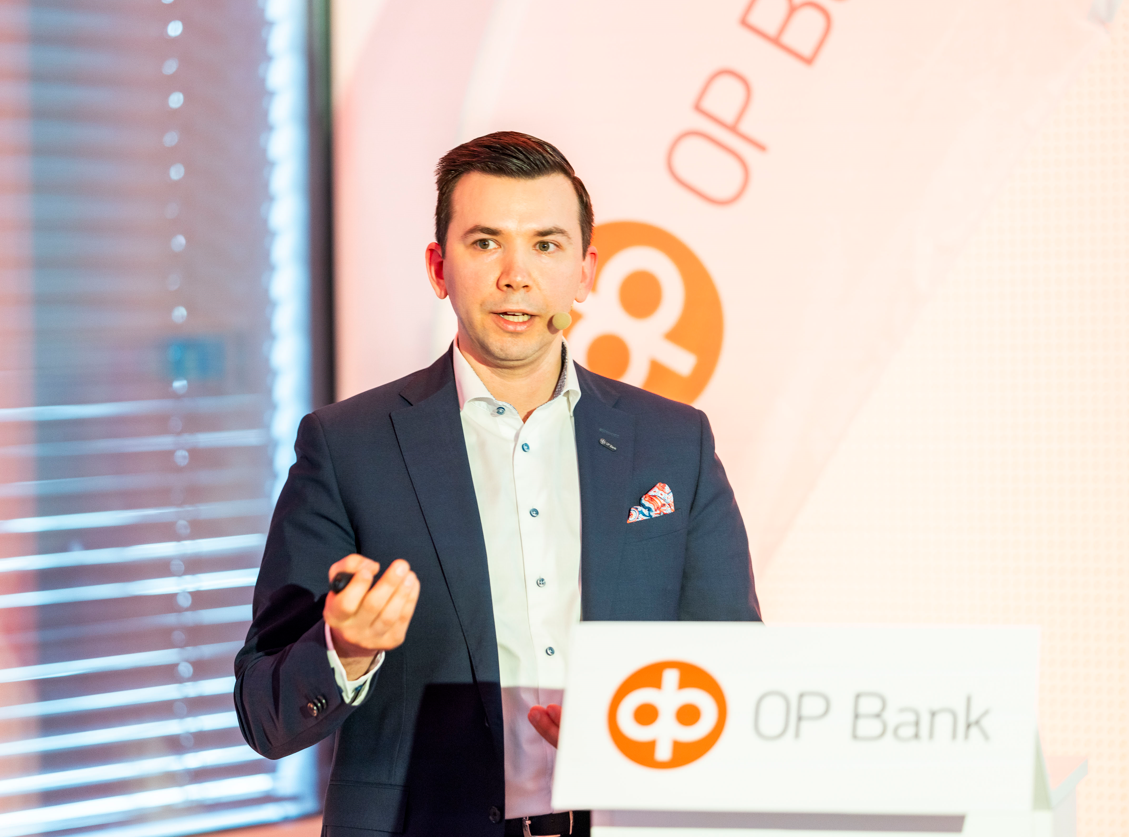
"This year, OP expects domestic demand to recover due to rising wages, improving export conditions, and the global economy. Real GDP growth this year is estimated to be 1.5%, and next year, with the recovery gaining momentum, growth will reach 2.5%," says Ilkka Saksa, Senior Strategist at OP Financial Group.
According to economist, Lithuanian companies should feel a revitalization in the export sector. This year, the prospects for global economic growth remain modest, but it is expected that growth will accelerate over the course of the year.
The industrial sector shows the most optimism, which will favor economies dependent on exports, including Lithuania. Industry in Lithuania accounts for about 17% of GDP - a larger share of the economy than in Latvia, Estonia, or Finland.
The largest export markets for Lithuania are Latvia, Poland, Germany, Estonia, and other European Union member states.
Inflation to moderate
According to economist, the biggest impact on inflation slowdown in the eurozone was the falling prices of food and energy. Further slowdown of inflation is hampered by prices in the service sector, which are held at the 4% growth threshold.
In the period 2022-2023, inflation in the Baltic countries was the highest among eurozone countries, reaching about 20% at its peak. Currently, inflation in Lithuania and Latvia has decreased to below eurozone average, but in Estonia remains elevated compared to other eurozone countries. OP forecasts inflation in Lithuania to moderate from some 9 % last year, to 1,5% in 2024, but accelerate to 2,5% in 2025.
EURIBOR decline - from June
As inflation slows down and approaches the desired 2% threshold, the European Central Bank (ECB), as forecasted by OP Financial Group, is expected to start reducing interest rates as early as June this year, and this is seen happening four times this year.
It is likely that by the end of this year, deposit interest rates will reach about 3%, while the EURIBOR interest rate will be 3% or less.
According to economist, last year the Lithuanian economy managed to withstand and did not experience a significant downturn; people were quite cautious in terms of consumption due to significant economic uncertainty and rising interest rates.
Lithuania also became one of the countries heavily affected by the rise in interest rates because in Lithuania, as in Finland, almost all mortgage loans are taken out with variable interest rates. Therefore, from June 2022 to the end of last year, average interest rates rose from 2% to 6%.
"The decreasing EURIBOR will have a positive impact on consumption and economic recovery," says I. Saksa.
OP Corporate Bank's Lithuanian branch is the fifth largest bank in Lithuania in terms of loan portfolio size. The bank exclusively serves business clients, catering to large and leading medium-sized companies in their respective fields.