
Survey: Two-thirds of large and mid-sized businesses in Lithuania are operating more sustainably
Two-thirds (65%) of large and medium-sized businesses in Lithuania are already applying sustainability principles in their operations, while roughly a fifth (23%) plan to start doing so within the next three years, according to a study conducted by "Kantar," a data and insights company, commissioned by our bank.
Lithuania leads in the Baltic States
In Estonia, about half (47%) of the surveyed businesses are already applying environmental, social, and responsible management principles in their operations, while a third (33%) plan to implement them in the next few years.
In Latvia, for the time being, slightly more than a third (38%) of surveyed businesses claim to apply sustainability principles in their operations, with slightly less than half (40%) considering doing so in the coming years.
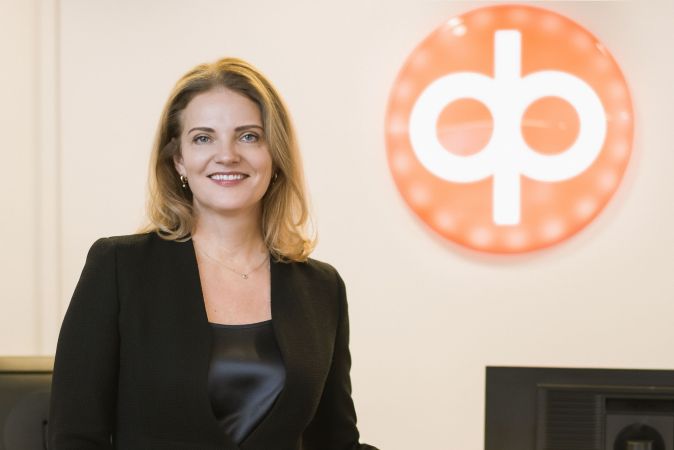
"Lithuanian companies are clear sustainability leaders in the Baltic States. The majority of the participating company representatives are aware of sustainability principles and confirm their implementation within their organizations. Companies understand the need to work differently, so we will see more investments in sustainable solutions in the coming years," says Leda Irzikeviciene, Head of the "OP Corporate Bank" branch in Lithuania.
According to Irzikeviciene, there is a growing number of inquiries from companies regarding funding for green projects, with one of the latest being a EUR 13 million funding for wind farm construction in Lithuania.
By the end of the first half of the year, our bank's portfolio of sustainable financing commitments reached EUR 6.0 billion. This portfolio includes business projects in the Baltic States and Finland, supported by the bank's green financing program.
Finland is a few steps ahead
Research data shows that only 2% of surveyed companies in Lithuania and 3% in Estonia have no intention of implementing sustainability principles in their operations, even though they are aware of them. In Latvia, this response was given by 12% of participating companies in the survey.
In Estonia (13%), there were more respondents unaware of sustainability principles compared to Lithuania (7%) and Latvia (7%).
According to Irzikeviciene, the Baltic States' business is still lagging behind Finland, where sustainability principles are implemented by most major companies.
Based on our bank's research in Finland, 86% of large companies state that their strategies now emphasize social responsibility more than before – focusing on impacts on people and society. For many years, these companies primarily emphasized environmental conservation.
"The green transition is already a part of the strategies of most major Finnish companies, so it's natural that in the post-pandemic period and in the context of security threats, they are shifting their focus towards employees and communities, their well-being, thus promoting socially responsible activities and corporate governance," says Irzikeviciene.
According to research, companies in Finland plan to invest 4.4% more in sustainable activities this year. This is primarily to meet growing customer expectations, promote business growth, and comply with regulatory requirements.
Sustainability attracts investments
Finland aims to become climate-neutral by 2035 and achieve zero CO2 emissions. The country's companies will play a crucial role in achieving this goal. The majority (56%) of the country's large companies state that this will require significant investments. Two-thirds (65%) of these companies believe that the government should support the green transition and introduce incentive programs.
Like the entire European Union, Lithuania aims to become climate-neutral by 2050. However, the transition to sustainability increases both the country's and businesses' competitiveness. The study conducted in Finland revealed that due to ambitious sustainability goals, the country has become a more attractive market for expansion and investment – confirmed by more than a third (36%) of the participating respondents.
"Currently, Finland generates all the necessary electricity without emitting greenhouse gases, which attracts investor attention. This is a great example for both Lithuania and all the Baltic States that sustainability goals benefit both companies, the state, and the environment," notes Irzikeviciene.
In total, 129 companies from Lithuania, Latvia, and Estonia participated in the "Kantar" study. Most of them were large and leading medium-sized businesses in their respective fields, and their representatives were interviewed by phone. The ESG (Environmental, Social, Governance) standard was used to evaluate the implementation of sustainability principles. This standard includes environmental, social, and governance criteria, covering environmental conservation, relationships with customers, employees, and communities, as well as fair and sustainable business management.