
Annina Tanhuanpää: companies reassess suppliers while seeking sustainability
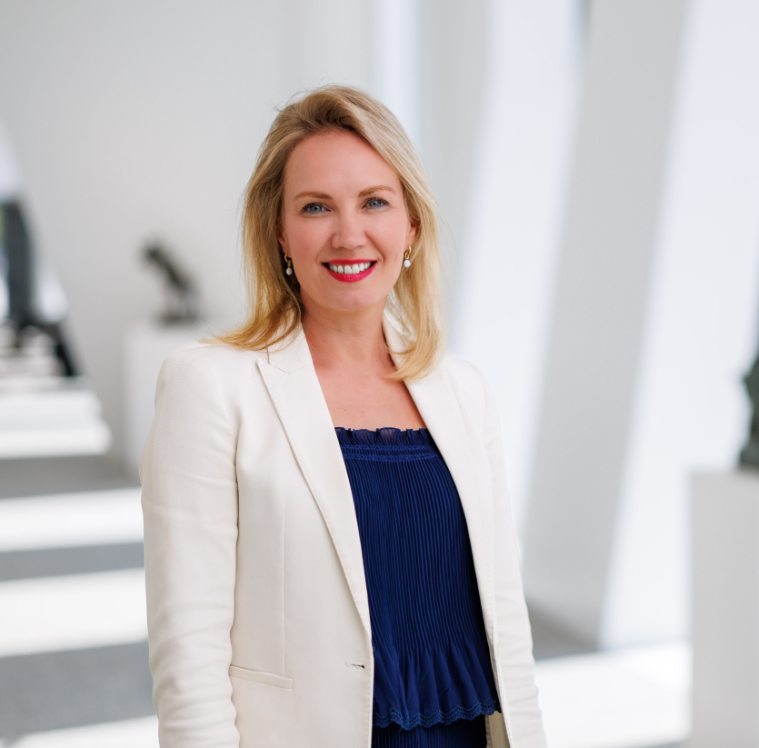
Finland, with the ambitious goal of becoming a carbon-neutral country by 2035, has successfully engaged the country's businesses in this initiative. Annina Tanhuanpää, Director of ESG and Corporate Responsibility at Finland's largest financial group, OP Financial Group, gave an interview to the biggest business news portal Verslo zinios in Lithuania and shared insights into the resources required for such large-scale changes and the challenges Finnish companies face in pursuing sustainability. We invite you to read full interview.
The European Union aims to become carbon-neutral by 2050, but Finland aims to achieve this goal even earlier, by 2035. How is the country progressing towards this highly ambitious target?
Indeed, Finland has set even more ambitious sustainability goals than the European Union. The Climate Change Act is incorporated into Finland's laws, making this commitment very serious, unaffected even by changes in government between terms. By 2030, we must reduce our emissions by 60%, with the reference year being 1990.
Achieving carbon neutrality by 2035 requires significant efforts, as we rely on carbon dioxide absorbers created by our forests. Recent studies indicate a decrease in our forests' ability to "bind" carbon dioxide, leading to intense debates on how to address this issue. Currently, we are in a challenging situation because our country is committed to and must achieve the set target. Failure would mean having to purchase CO2 credits from other countries, an extreme measure as credits are limited and extremely expensive.
How has the business sector responded to the country's set goal?
Finland's Federation of Industries has actively participated and encouraged businesses to strive for a carbon footprint-neutral stance. It seems that the industry has engaged quite well in these goals. Of course, it is not a walk in the park – there are numerous tasks and requirements that companies must fulfill, obstacles that need to be overcome. However, there is a strong commitment from businesses to achieve this goal.
Public sector organizations are also committed, and the government is taking appropriate steps – increasing investments in green energy-powered transportation, developing a sustainable growth program, promoting solutions that reduce CO2 emissions. Additionally, a project is being implemented to make Finland a leader in circular economy, hydrogen, emission-free energy systems, and other sustainability solutions.
What role do financial institutions play in implementing the green transformation?
A significant role. In no country – be it in Lithuania, Finland, or elsewhere – will state funds be sufficient to implement the green transformation and transition to a sustainable economy.
Finland's budget for this year is just under EUR 80 billion. The entire balance of the OP Financial Group at the end of the third quarter of this year was EUR 155 billion. And this is just one bank. This pattern holds true in all developed countries. Therefore, the involvement of the financial sector – banks, investors, insurance companies – in achieving sustainability goals is absolutely essential.
Our group's statistics show that the total exposures from green loans and sustainability-linked loans and facilities amounted to EUR 6.2 billion in the third quarter of this year. For several years now, we have observed a significant growth in this portfolio, and the demand is enormous.
Projects funded by green finance are inherently "green". For example, wind and solar power plants are built with their support. Since the beginning of this year, we have started financing green projects for small and medium-sized businesses, whereas previously, we focused on working with large companies.
I believe there's a practice in Lithuania that you could adopt from us, and it applies in other countries as well. The Green Transformation Investment Data Center is a public platform that any company can use to create or invest in sustainable solutions. Of course, not every project posted here will be implemented. Still, by using this platform, we have already exceeded the EUR 200 million threshold for green investments.
What sustainability goals have you set for your organization?
The primary goal is to make our client portfolio carbon-neutral by 2050. After conducting calculations, we found that 99.98% of our CO2 footprint is generated by our clients' activities – financing, investments, and insurance. The emissions generated by our organization itself constitute a very small part of the footprint. We plan to make our organizational processes (at the first and second emissions levels) carbon-neutral by 2025.
After calculating our emissions, we launched a significant project this year, analyzing our business loans and mortgage portfolio. We aimed to identify the major sources of emissions. We found that the three most polluting areas are energy and manufacturing, agriculture, and mortgage loans. We aim to significantly reduce emissions in these areas by 2030. Additionally, by 2030, we plan to halve the greenhouse gas emissions generated by our investment portfolio.
What assistance do companies receive in their journey towards sustainability?
Every year, we conduct extensive research among our business clients. The latest survey data is, frankly, concerning – a significant portion of large companies is reviewing their supply chain and considering changing suppliers just to meet their sustainability goals and provide accurate sustainability reports, including the corporate sustainability reporting directive coming into effect in 2024.
It is essential to note this signal – many smaller companies depend on large partners they collaborate with. The opportunities for small businesses are quite different from those of large ones. Often, small businesses lack internal sustainability specialists and have limited opportunities to consult with external sustainability consultants, simply because they are not readily available.
We educate and support our clients on sustainability issues, explaining where to start. Collaborating with the Chambers of Commerce in Finland, we have developed training on how to calculate their carbon footprint. The training lasts a few hours, during which we teach them to calculate their first and second-tier emissions.
Certainly, many companies will have to incorporate sustainability into their operations and learn to track their impact to remain relevant in the market.
How much initiative are Finnish companies taking to work more sustainably?
The issue of sustainability arises in every meeting with our clients. Our annual survey data shows that more than 65% of our clients – large companies – see sustainability initiatives more as an opportunity than a risk. In other words, they believe that no matter the environmental, social, or governance factor they encounter, it can be exploited as an opportunity, leading to new solutions and even products.
Most sustainability initiatives are focused on addressing climate change. Companies pay particular attention to the aspect of biodiversity – measuring their impact on biodiversity and seeking solutions. Many initiatives are also directed towards human rights and employee safety.
What challenges do companies face in pursuing sustainability?
Firstly, regulatory requirements and expectations from businesses are changing and growing extraordinarily fast, making companies run and, in a way, lagging behind. It's not always clear what needs to be done, what goals need to be set. However, it's better to start taking small steps now, even if the direction needs to be adjusted – waiting will only widen the gap, and adapting will become even more challenging. Although the perspective may not always seem clear, start acting gradually – it's better to adjust steps along the way than to do nothing.
Secondly, data. Businesses typically make decisions based on data, having a solid foundation. In the sustainability field, unfortunately, the principles are somewhat different. Not all necessary data is always collected and available; sometimes, it's unclear how to gather them or how to distinguish them to avoid duplication. So, regardless of the size of the company, a high-quality data collection and management system, allowing the collection of reliable material and opening up data gaps to be filled in the future, is crucial for achieving sustainability.
As a bank and asset manager, we are committed to the Paris Agreement. Through our work and by supporting our value chain, we want to ensure that climate targets are turned from words to actions. We all have a role in solving the sustainability challenge.